
WHERE TO PLACE A BRONZE SCULPTURE
Choosing where to place a sculpture is not simply a matter of finding an available space. Its height, the light it receives, its surroundings and the possibility of viewing it from different angles can significantly change the way it is perceived.
There is no absolute rule, but a few simple principles can help to show a sculpture to its best advantage.
At What Height Should You Place a Sculpture?
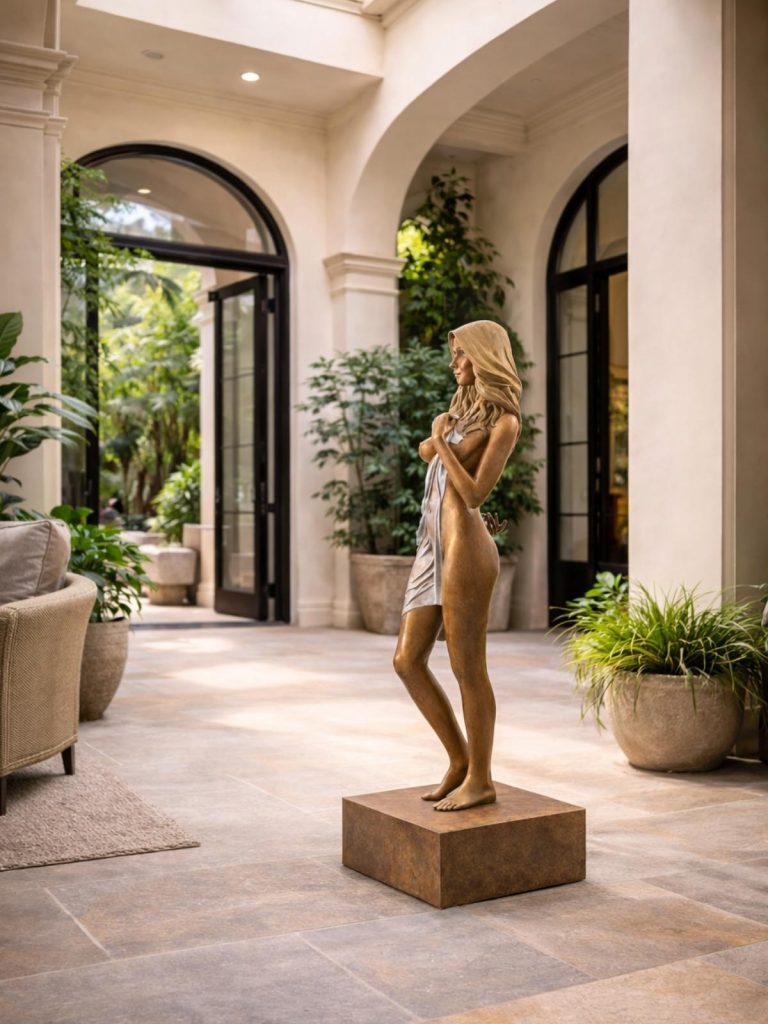
The right height depends on the size of the sculpture, but also on where it will most often be viewed from.
In a hallway or other area where people are usually standing, a sculpture can be placed on a console table, pedestal or occasional table, at a height that allows it to be viewed naturally.
In a living room, the approach may be different. Near a sofa or armchair, it may be preferable to position the sculpture lower so that it falls naturally within the field of vision when seated. A seated or reclining sculpture is particularly well suited to this type of setting.
Large sculptures can be placed directly on the floor. In this case, it is important to consider the viewing distance available, as well as the main areas of the room from which the sculpture will be seen.
The ideal height is therefore not a fixed measurement: it depends on the setting and the usual position of the viewer.
Leave Space Around the Sculpture
A sculpture generally benefits from not being surrounded by too many decorative objects. On a console table or piece of furniture crowded with frames, vases or ornaments, it can easily blend into its surroundings.
This does not mean it needs to be completely isolated. A few objects can sit alongside it perfectly well, provided they do not compete for attention.
Unlike a painting, a sculpture is three-dimensional. Whenever possible, its position should therefore allow it to be viewed from different angles. It does not need to stand in the centre of a room: against a wall, on a console table or in a niche, its main viewpoints can still remain accessible.
When there is not enough space to walk around it, a mirror placed behind or nearby can provide another viewpoint and reveal a less visible side.
For larger sculptures, movement through the room should also be considered. There should be enough distance to view the sculpture properly without it becoming an obstacle.
Light Can Change Everything
For figurative sculpture, including Alain Choisnet’s sculptures, lighting plays an important role in how forms, faces and patinas are perceived. The following advice therefore applies primarily to this type of sculpture.
Natural light changes throughout the day, continually altering the way the bronze and its patina are perceived. Before settling on a permanent position, it can be useful to move the sculpture or turn it slightly. A few centimetres or a different orientation may be enough to make a noticeable difference to how it appears.
For artificial lighting, it is best to choose a bulb that produces light close to natural daylight. Light that is too cool and white tends to flatten the forms and alter the appearance of the colours in the patina.
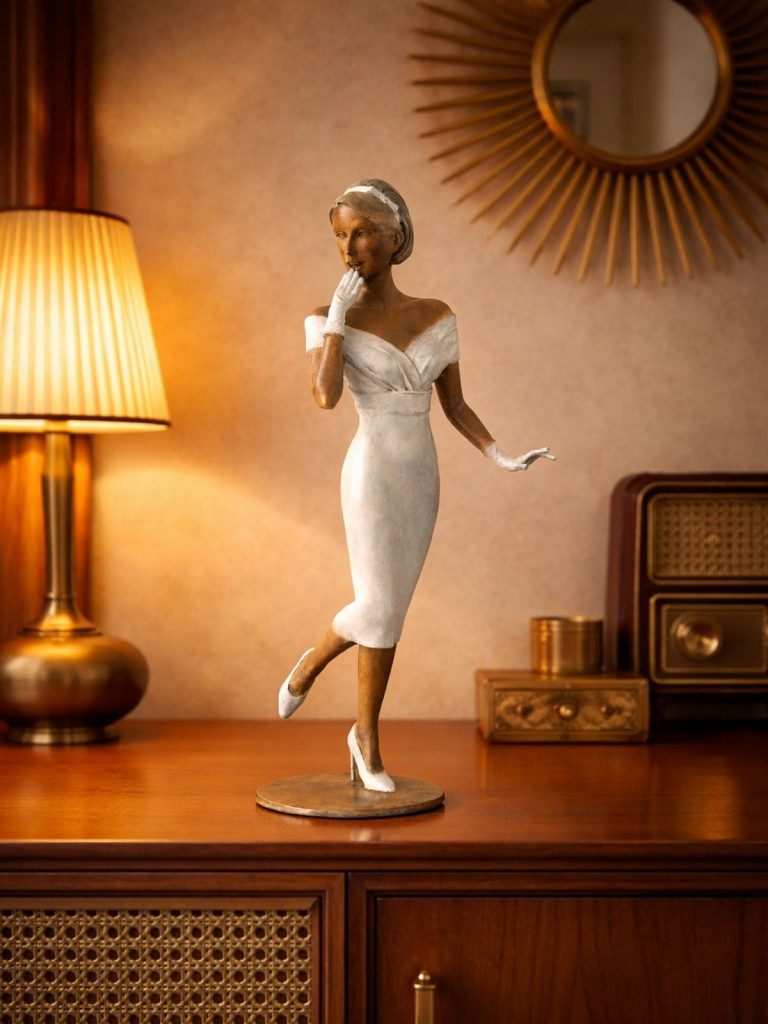
The direction of the light is equally important. Lighting placed directly above or, even more so, below the sculpture creates shadows on a face that are very different from those we are accustomed to seeing. The features can then appear harsher or become distorted by shadows extending downwards or upwards.
Slightly angled lighting, positioned around or just above face level, is generally preferable. It brings out the forms while preserving the natural modelling of the features. The distance and direction of the light source can then be adjusted by observing its effect directly on the sculpture.
Consider the Bronze and Its Surroundings
Bronze allows a sculpture to be displayed in many different rooms of the home, although a few precautions are advisable.
Prolonged exposure to humidity can, over time, cause reactions on the surface of the metal and alter the appearance of the patina. It is therefore best to avoid areas regularly exposed to steam or condensation.
Try Different Positions Before Deciding
The position initially imagined is not always the one that works best once the sculpture is in place.
Before deciding, it can therefore be worthwhile trying a few different positions and living with the sculpture in each one for a while.
Ultimately, the right place is the one where you enjoy seeing it every day.