
THE ARTISTIC IDENTITY OF A SCULPTOR
How Does a Sculptor Develop an Artistic Identity?
Sometimes we recognise an artist’s work before we have even read their name. A subject, a particular way of treating forms or certain recurring elements can be enough to create this sense of familiarity.
Yet this identity is not necessarily defined at the beginning of an artist’s career. It can develop gradually as the artist works, makes choices, abandons certain directions and returns to those that feel more closely aligned with their work.
An Identity That Emerges Over Time
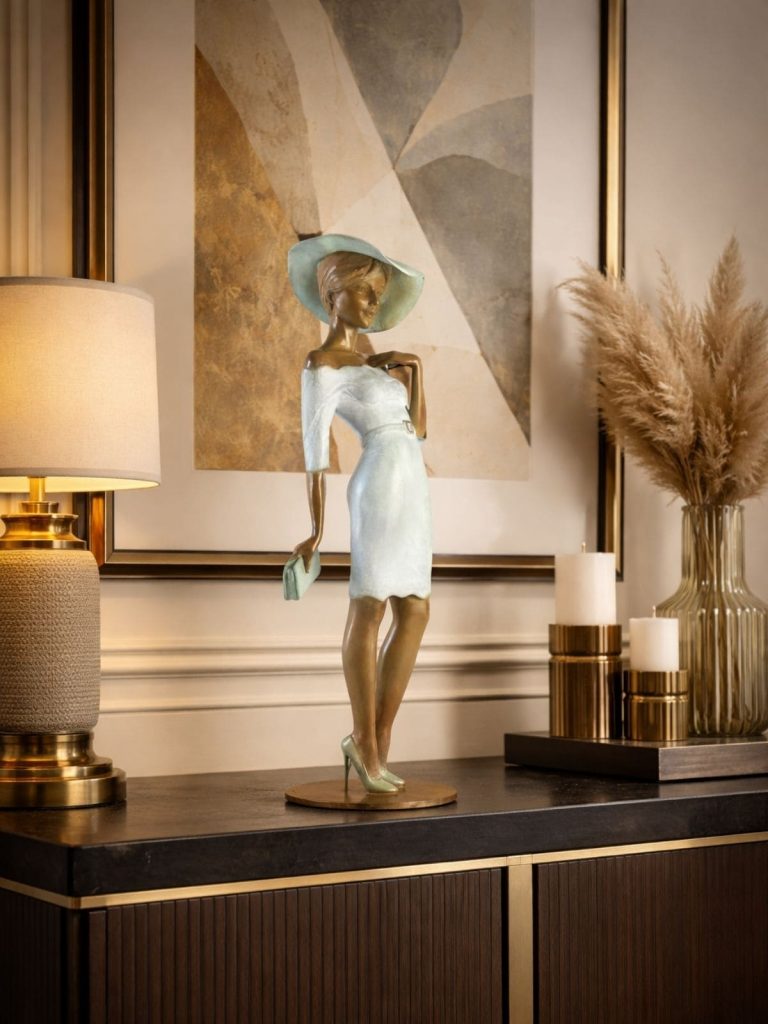
An artist may explore different subjects or ways of working before finding a direction of their own. Some avenues of exploration are short-lived, while others establish themselves naturally and become recurring elements of the work.
Gradually, certain choices become more than occasional: subjects the artist returns to, a particular way of modelling, certain proportions, or a distinctive approach to a pose.
Artistic identity is largely born from this continuity. It does not prevent evolution or new explorations; rather, these enrich a body of work whose foundations are already recognisable.
What Makes an Artist’s Work Recognisable
There is no single element that defines a style. The subject can play an important role, but it is not enough: two sculptors working from the same model can produce very different sculptures.
The way forms are simplified or, conversely, rendered in greater detail, the chosen proportions, the treatment of surfaces, the poses and the way a material is used all contribute to this identity.
Over time, these choices form a visual language that is unique to the artist. They can sometimes make the artist’s work recognisable without a signature or even knowing the title of the sculpture.
An Identity Is Not Repetition
Being recognisable does not mean continually reproducing the same sculpture. On the contrary, a sufficiently established artistic identity allows an artist to explore new subjects without losing what characterises their work.
The work can then evolve through subtle changes: a new pose, a different format, the introduction of drapery or another way of treating surfaces. Some sculptures may move further away from earlier works while retaining certain shared characteristics.
It is this ability to evolve without having to start again in an entirely different direction each time that allows an artist’s work to develop over time.
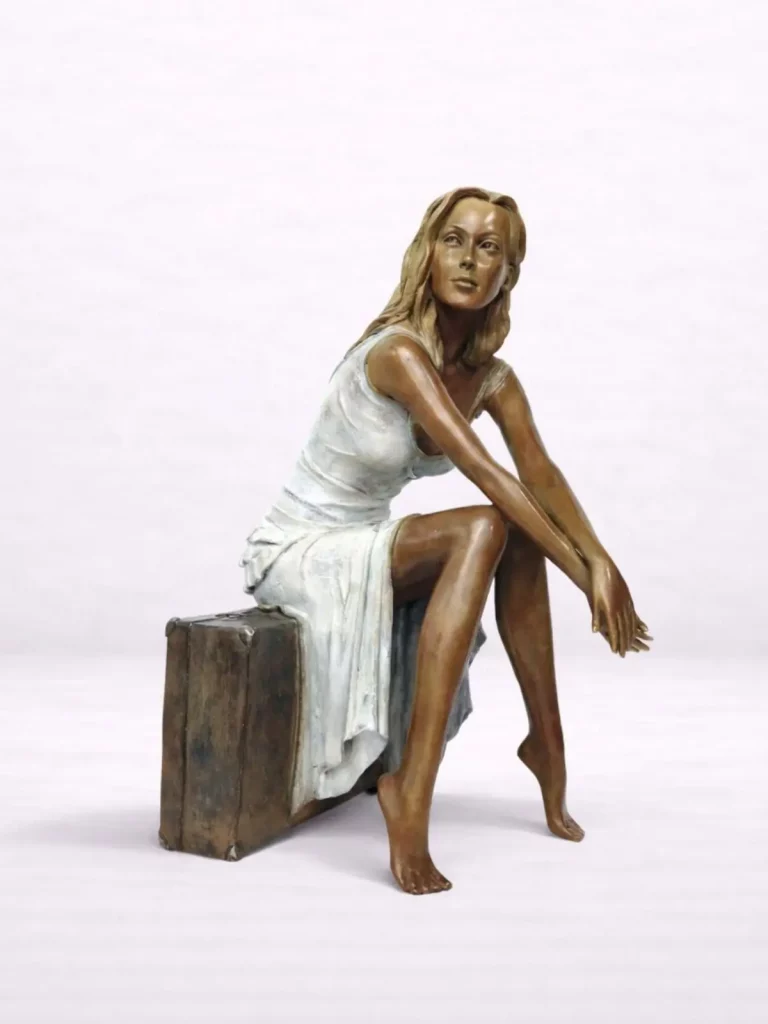
Alain Choisnet’s Artistic Identity
Alain Choisnet did not define, from his earliest sculptures, all the characteristics that would come to shape his work. They emerged gradually through practice.
The decision to devote his work to the feminine became a constant. His sculptures favour calm poses, with a pursuit of elegance and refinement that can be found in both the nudes and the draped sculptures.
From one sculpture to another, the models and poses change, but this direction remains. It is this continuity, built over the years rather than defined in advance, that now forms the identity of his work.