
HISTORY AND MEANING OF BRONZE SCULPTURE
Bronze has been used in sculpture for several thousand years. Employed by ancient civilisations, brought to a high level of mastery by the Greeks and Romans, revived during the Renaissance and widely used throughout the 19th and 20th centuries, it continues to hold an important place in contemporary art.
This exceptionally long history has contributed to the prestige associated with bronze today. From ancient works preserved in museums to contemporary sculptures, bronze also reflects the transmission of craftsmanship that has continued to evolve.
The Origins of Bronze Sculpture
The earliest bronze objects appeared in the Near East several thousand years BCE. This alloy, composed mainly of copper and tin, was gradually used to make everyday objects, weapons, as well as statuettes and objects associated with religious practices.
In Mesopotamia and ancient Egypt, it was notably used to represent deities, rulers and animals. These works already demonstrate a high level of skill in metalworking.
Lost-wax casting, whose principle has been known since Antiquity, made it possible to create increasingly elaborate forms. Refined over the centuries, this technique would remain closely linked to the history of bronze sculpture.
Ancient Greece and the Mastery of Bronze
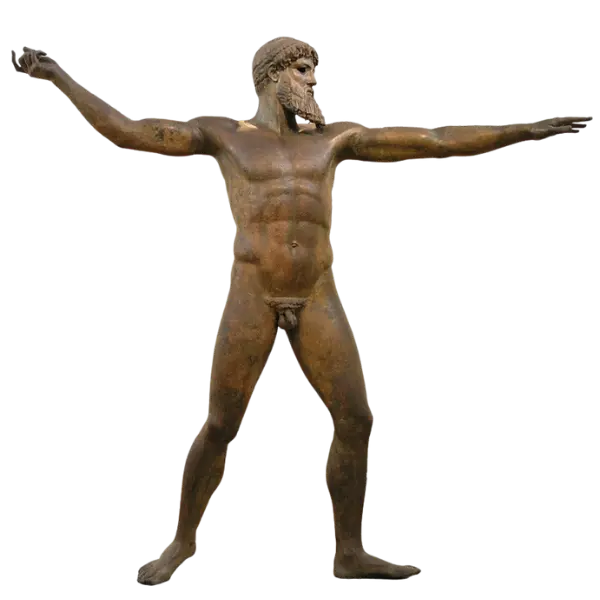
From the 5th century BCE onwards, Greek sculpture entered a particularly important period. Bronze allowed sculptors to develop poses and movements that were difficult to achieve in stone and made it possible to create large-scale works.
The Artemision Bronze, dating from the mid-5th century BCE, is one of the best-known examples. The Charioteer of Delphi, created around the same period, also demonstrates the level of mastery achieved by Greek workshops.
However, relatively few large Greek bronzes have survived. The metal itself was valuable, and many sculptures were melted down over the centuries so that it could be reused. Much of what we know about ancient Greek sculpture therefore comes from marble copies made later by the Romans.
Rome and Bronze in Public Spaces
The Romans largely inherited Greek techniques and models and gave bronze a prominent place in public spaces. Portraits, monuments and equestrian statues contributed to the representation of power and the celebration of important individuals.
The equestrian statue of Marcus Aurelius, created in the 2nd century, is one of the most famous surviving examples. Its survival is all the more remarkable given that many large ancient bronzes have disappeared.
After the fall of the Western Roman Empire, large bronze sculptures became less common in Europe. Bronze nevertheless continued to be used, particularly for religious works, monumental doors and various decorative elements.
The Renaissance Revives Large-Scale Bronze Sculpture
From the 15th century onwards, renewed interest in Antiquity restored bronze sculpture to a prominence it had not enjoyed for several centuries.
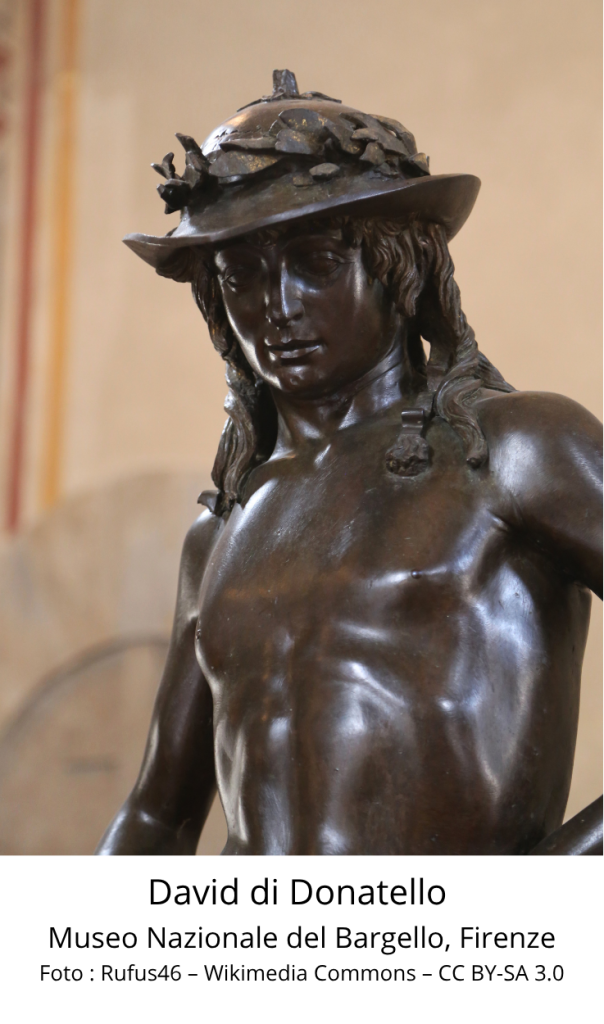
Donatello played a major role in this revival. His David, created in the 15th century, is one of the emblematic works of the period. Commissions increased, and workshops regained the expertise required to produce major sculptures.
Bronze also became increasingly popular in private collections. Alongside monumental commissions, smaller sculptures were sought after both for their artistic qualities and for the value attributed to the material.
The 19th Century and the Rise of Art Foundries
During the 19th century, bronze sculpture underwent significant development. Art foundries multiplied, and some firms gained considerable renown for the quality of their work and their collaborations with sculptors.
Susse Frères, Barbedienne and Thiébaut were among the leading names of the period. Their workshops produced bronzes for numerous artists and contributed to the development of sculptures intended both for monumental commissions and private collections.
The expertise of the founder thus became increasingly important, while collaboration between artist and foundry continued to develop.
This period left a considerable legacy, found in museums and collections, as well as in public squares, gardens and monuments.
Bronze in Contemporary Sculpture
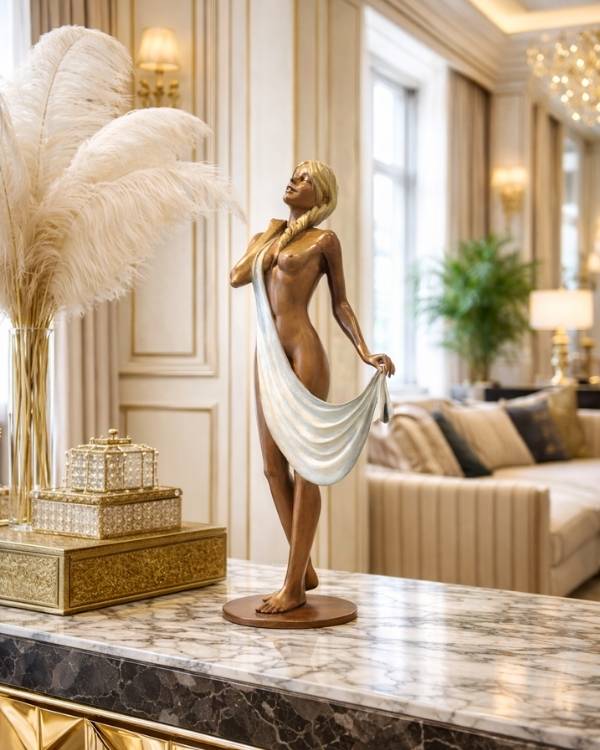
The long history of bronze still contributes to its prestige today. Associated for centuries with major achievements in sculpture, it continues to hold a privileged place among artists, collectors and art enthusiasts.
This long tradition naturally finds its place in contemporary art. Bronze allows sculptors to create work that reflects their own time while drawing on a material whose qualities are associated with fine craftsmanship, durability and the mastery of demanding techniques.
Today, art foundries continue to develop their practices while maintaining the exacting standards required when working with bronze.
Bronze is therefore more than simply a legacy of art history. Its recognised prestige, the quality of craftsmanship it demands and several millennia of sculptural tradition continue to contribute to its appeal today.
A History That Continues
From the earliest works of Antiquity to contemporary sculptures, bronze has crossed civilisations and served many different purposes. It has been associated with religious practices, the representation of power, major public commissions, and later with museums and private collections.
This history continues with today’s sculptors. Alain Choisnet has chosen bronze for his work devoted to the feminine and collaborates with art foundries to produce his sculptures.
His work is thus part of a long tradition without seeking to reproduce the forms of the past. The material remains, while each period and each artist gives it a different expression.