
CONTEMPORARY BRONZE FEMALE NUDE
The Female Nude in Sculpture
The nude holds a distinctive place in the history of Western sculpture. In ancient Greece, the male nude appeared very early, particularly in representations of athletes, heroes and gods. The female nude followed a different path: women and goddesses continued to be depicted clothed for much longer.
An important change came in the 4th century BCE with Praxiteles’ Aphrodite of Knidos. The original sculpture is now lost but is known through numerous ancient versions. It is regarded as the first major Greek representation of a fully nude goddess and had a considerable influence on Hellenistic and later Roman art.
The female nude gradually became one of the major subjects of sculpture.
From the Idealised Figure to the Living Model
After being far less prominent in medieval art, the nude regained an important place during the Renaissance with the rediscovery of Greco-Roman art. Artists once again drew on classical models and their idealised proportions.
This tradition later became an integral part of artistic training. In the 18th and 19th centuries, the study of the nude, first from classical sculptures and later from life models, formed part of the training offered by art academies. The purpose was no longer simply to depict nudity: working from a live model allowed artists to study proportions and poses directly.
This practice gradually transformed the way the nude was represented. Artists gradually moved away from idealised models and began working from real people and their natural poses.
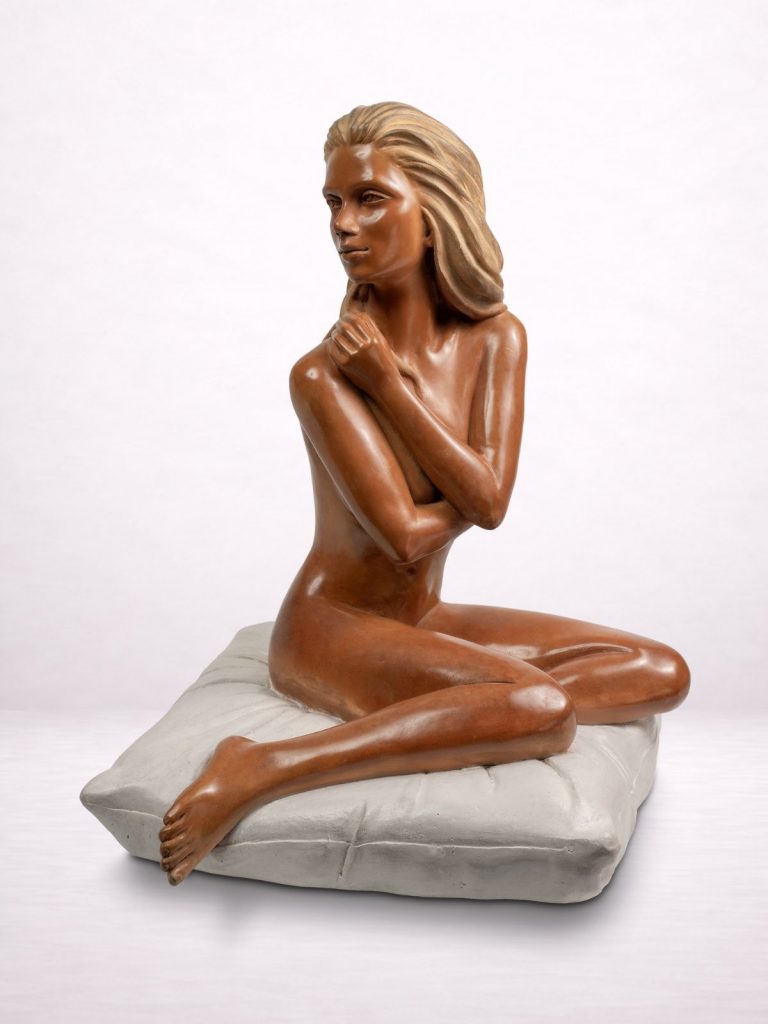
The Female Nude Today
Today, the female nude remains a subject that sculptors can approach freely, without necessarily referring to classical ideals or mythological themes.
The nude also has a distinctive quality: without clothing, many of the visual clues that would immediately place a work in a particular period disappear. A hairstyle or pose may offer some indication, but far less than clothing would.
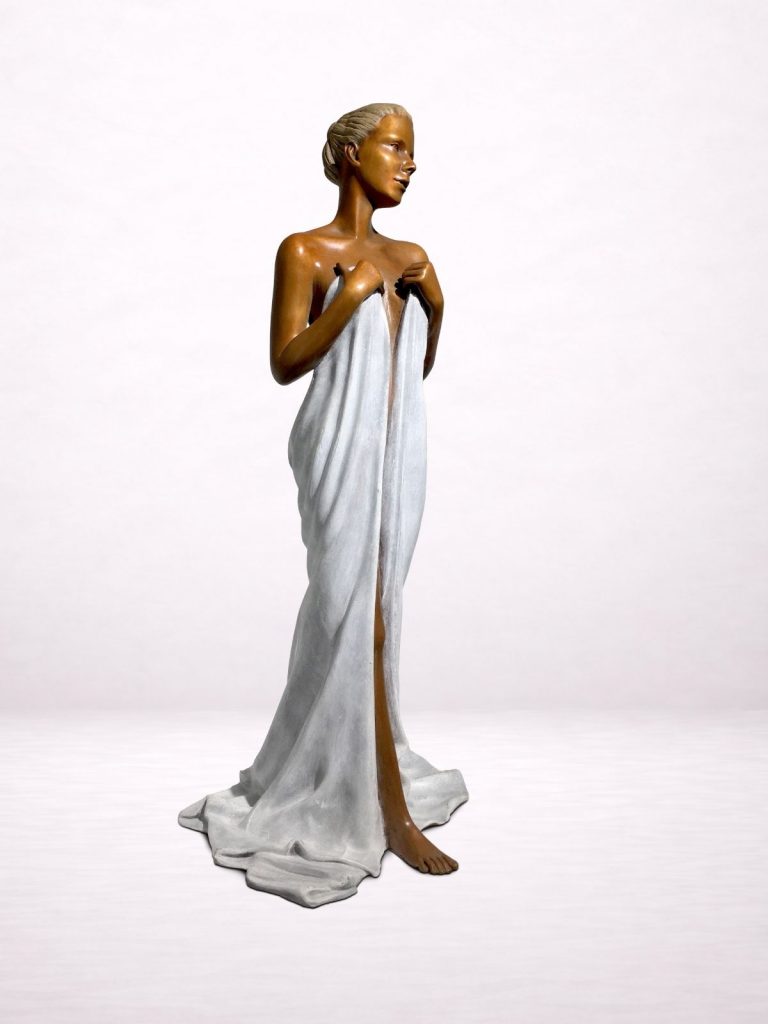
The Nude in Alain Choisnet’s Work
The feminine is at the heart of Alain Choisnet’s work, and the nude naturally holds an important place within it.
His sculptures favour calm poses, combining softness and serenity with a sense of elegance and refinement.
Some are entirely nude, while others combine the nude with drapery. The drapery is not necessarily intended to conceal; it becomes part of the sculpture and offers another way of approaching the same subject.